Spacecraft Mechanisms
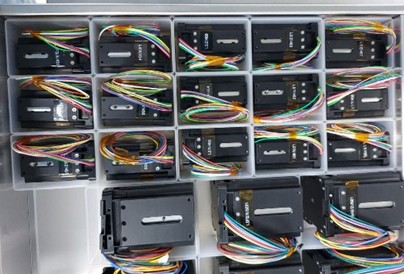
The rapid growth of the small satellite industry—often referred to as “NewSpace”—combined with declining launch costs, has driven the large-scale deployment of small satellite constellations. These constellations often have short operational lifespans and require regular replenishment, creating a substantial market opportunity for the production of essential small satellite components. Among these, the reaction wheel stands out as a critical element. As a torque-generating device within the satellite’s Attitude Determination and Control System (ADCS), it plays a key role in maintaining and adjusting the satellite’s orientation (i.e. attitude) in space. The ADCS enables vital functions such as solar tracking, Earth imaging, and the execution of mission-specific attitude profiles.
Moreover, the growing adoption of AI/ML techniques has significantly amplified demand for high-frequency images for Exploitation of Earth Observation (EO) data. Agile satellites enabled by high-torque reaction wheels offer a significant competitive advantage in the EO market by enabling the satellites to rapidly reorient and target specific locations on Earth with greater speed and precision. This agility enables more frequent image captures, improved temporal resolution, and the ability to respond dynamically to customer needs or time-sensitive events (e.g., disaster response for emergency interventions).


Copyright 2026. All Rights Reserved by Sheral Crescent.